

By Advanced Pain Solutions – Redmond, Oregon
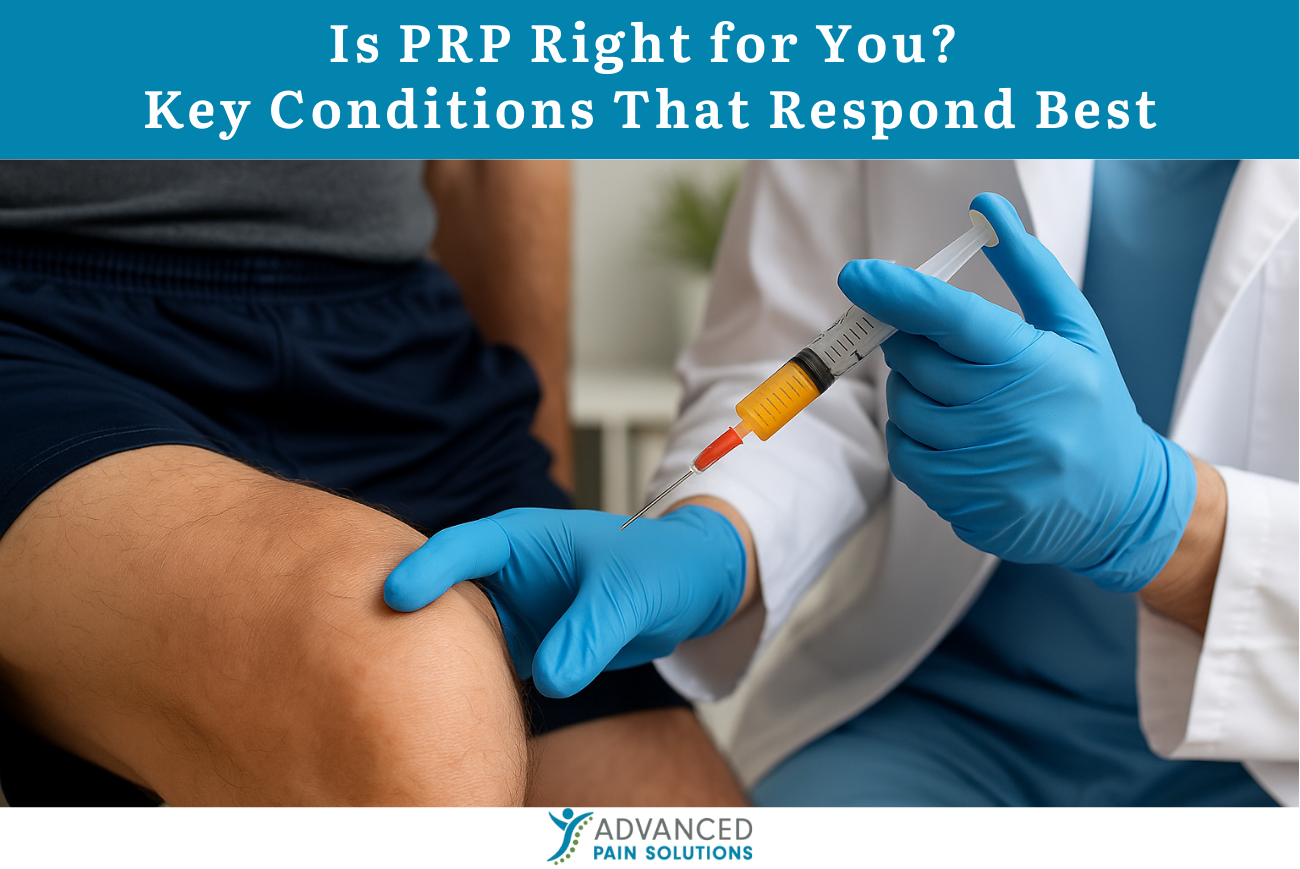
Platelet-Rich Plasma (PRP) therapy has quickly moved from cutting-edge innovation to a trusted option for patients seeking natural, regenerative healing. By using your own blood’s concentrated platelets, PRP delivers powerful growth factors directly to injured or degenerating tissues—stimulating repair, reducing inflammation, and helping you return to an active lifestyle.
Understanding PRP Therapy
PRP therapy involves drawing a small sample of your blood, spinning it in a centrifuge to concentrate the platelets, and then injecting the platelet-rich plasma into the target area. Because the treatment uses your own blood components, the risk of allergic reaction or rejection is extremely low.
Conditions That Respond Best to PRP
PRP isn’t a one-size-fits-all solution, but it shines in specific scenarios. Below are the conditions where PRP is most effective:
1. Joint Pain & Osteoarthritis
PRP injections can slow cartilage degeneration, reduce inflammation, and improve joint lubrication—providing relief for knee, hip, shoulder, and ankle osteoarthritis.
2. Tendon & Ligament Injuries
Chronic tendonitis (tennis elbow, golfer’s elbow, Achilles tendonitis) and ligament injuries such as mild-to-moderate sprains can heal faster with PRP by boosting collagen formation.
3. Sports Injuries
Athletes suffering from muscle strains, partial tears, or overuse injuries often choose PRP to reduce downtime and avoid surgery.
4. Post-Surgical Healing
PRP may speed recovery and enhance tissue repair after orthopedic surgeries, particularly for rotator cuff or meniscus repairs.
5. Degenerative Disc & Spine Pain
For select patients with low back pain or degenerative disc disease, PRP injections into spinal structures can reduce inflammation and improve function.
Advantages of PRP Therapy
- Natural & Autologous: Uses your own blood—no foreign substances.
- Minimal Downtime: Most patients return to light activity the same day.
- Potential to Delay Surgery: Can postpone or even eliminate the need for invasive procedures.
Comprehensive Q&A
Q: How many PRP sessions will I need?
A: Many patients experience improvement after one treatment, but some may require a series of 2–3 sessions spaced several weeks apart depending on the condition and severity.
Q: Is the procedure painful?
A: You may feel mild discomfort during the injection, similar to a standard shot. Local anesthetic and ultrasound guidance are used to minimize discomfort.
Q: How soon will I see results?
A: Pain relief and improved function often appear within 2–6 weeks as the body’s healing response progresses.
Q: Are there side effects?
A: Side effects are generally mild, such as temporary soreness or swelling at the injection site. Because PRP is derived from your own blood, allergic reactions are rare.
Q: Who is not a good candidate?
A: Patients with active infections, certain blood disorders, or uncontrolled chronic illnesses may not be suitable for PRP. A thorough medical evaluation is essential.
Q: Can PRP be combined with other therapies?
A: Yes, many patients combine PRP with physical therapy, bracing, or regenerative treatments to maximize results.
Why Choose Advanced Pain Solutions
At Advanced Pain Solutions, our team specializes in evidence-based, minimally invasive treatments to help you heal naturally and regain your quality of life. Our clinicians are experienced in advanced regenerative procedures and use state-of-the-art imaging to ensure precise, effective PRP injections.
Contact Information
Advanced Pain Solutions
1020 SW Indian Ave, Ste 100
Redmond, OR 97756
Phone: (541) 923-6024
Website: apsoregon.com
Take the Next Step
If you’re wondering whether PRP is right for your joint pain, sports injury, or chronic condition, schedule a consultation with our team. We’ll carefully assess your needs and develop a customized treatment plan to help you move toward lasting relief—naturally.
