

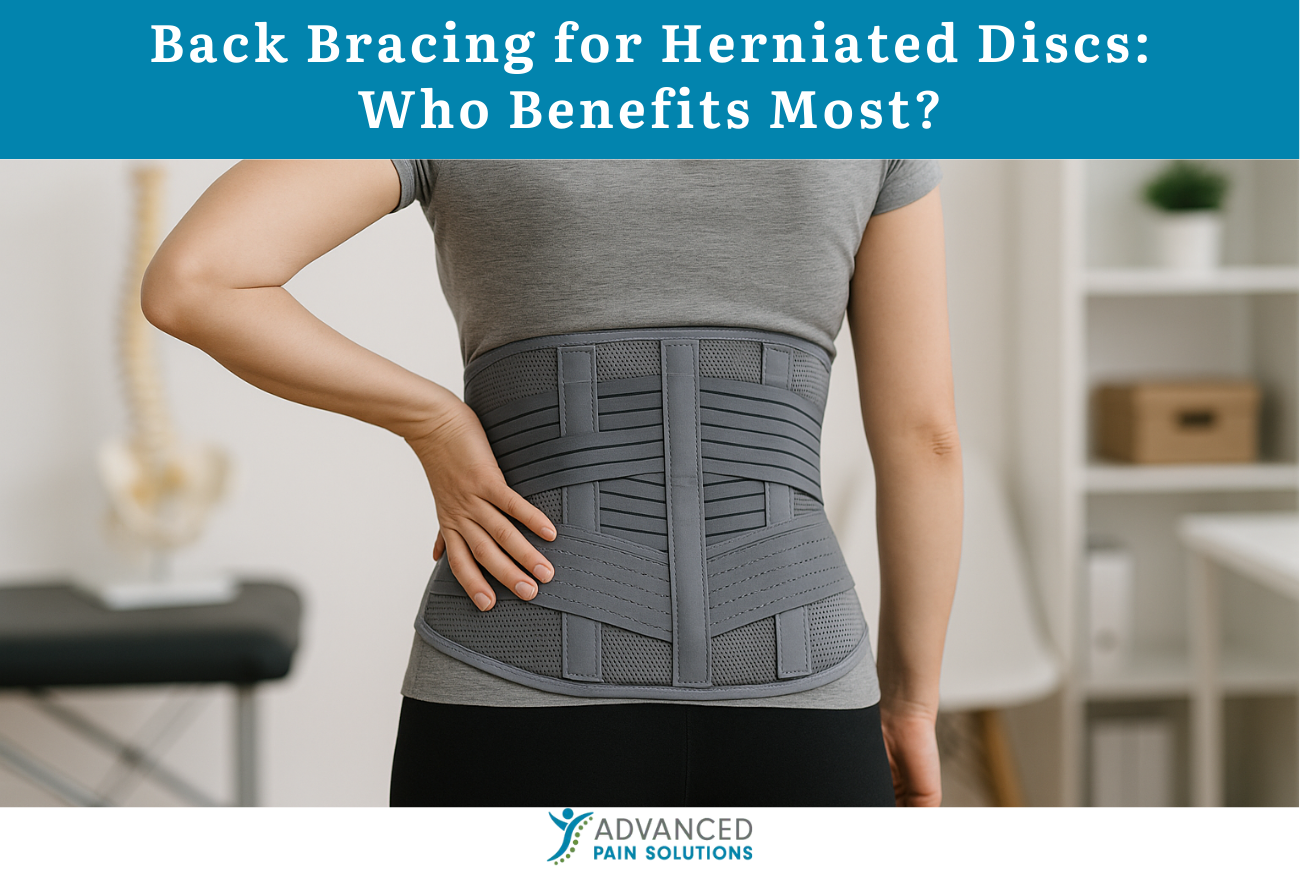
Herniated discs are a common source of back pain, often causing discomfort, reduced mobility, and nerve irritation. For many patients, non-surgical treatments like back bracing can play a pivotal role in easing pain and supporting healing. At Advanced Pain Solutions, we specialize in personalized, integrative care to help you find relief and return to an active lifestyle.
Understanding Herniated Discs
A herniated disc occurs when the soft inner material of a spinal disc pushes through its tougher outer layer, pressing on nearby nerves. This can lead to:
- Lower back pain
- Radiating leg pain (sciatica)
- Numbness or tingling in the extremities
- Muscle weakness
While some herniated discs improve with time and conservative care, supportive interventions like back bracing can provide critical relief.
How Back Braces Help
Back braces are designed to:
- Stabilize the spine, reducing excessive movement that worsens disc irritation.
- Limit bending and twisting, giving the injured disc space to heal.
- Reduce muscle tension, which can lessen pain and improve posture.
By reducing strain, braces can also encourage proper spinal alignment and help prevent further injury during recovery.
Who Benefits Most from Back Bracing?
Back bracing isn’t for everyone, but certain patients may experience significant relief:
- Acute Herniated Disc Pain
Patients with sudden, severe back pain may benefit from temporary bracing to reduce inflammation and support healing. - Post-Injury or Post-Surgical Support
After a back injury or surgery, bracing can stabilize the spine as tissues repair. - Active Individuals
Those who need to stay mobile for work or daily tasks may find that a brace provides extra protection while maintaining activity. - Chronic or Recurrent Pain
Patients with recurring herniated disc episodes may use bracing intermittently during flare-ups.
Note: Bracing should be part of a comprehensive treatment plan. Overuse without professional guidance can lead to muscle weakening.
Complementary Treatments
At Advanced Pain Solutions, back bracing is often combined with:
- Physical Rehabilitation to strengthen core muscles
- Chiropractic care to improve alignment
- Regenerative treatments such as platelet-rich plasma (PRP)
- Lifestyle coaching for posture and ergonomics
Q&A: Back Bracing for Herniated Discs
Q: How long should I wear a back brace each day?
A: Most patients benefit from wearing a brace for a few hours at a time during activities that strain the back. Your provider will tailor specific guidelines to your condition.
Q: Can a brace heal my herniated disc?
A: A brace doesn’t heal the disc itself, but it reduces stress on the spine, allowing the body’s natural healing processes to work more effectively.
Q: Will wearing a brace weaken my back muscles?
A: Prolonged, continuous use can lead to muscle deconditioning. That’s why it’s important to follow a prescribed schedule and pair bracing with strengthening exercises.
Q: Is a custom brace better than a store-bought one?
A: Custom braces offer optimal fit and support for specific spinal issues, but some off-the-shelf braces can be effective for mild to moderate cases. Your provider will recommend the best option.
Q: How soon will I feel relief?
A: Many patients notice reduced pain within days of using a brace, though individual results vary depending on the severity of the herniation and adherence to the treatment plan.
Contact Advanced Pain Solutions
For expert evaluation and personalized care for herniated discs and back pain:
Advanced Pain Solutions
1020 SW Indian Ave, Ste 100
Redmond, OR 97756
Phone: (541) 923-6024
Website: apsoregon.com
Our team is here to help you discover whether back bracing—and a holistic treatment approach—can provide the relief you need.
