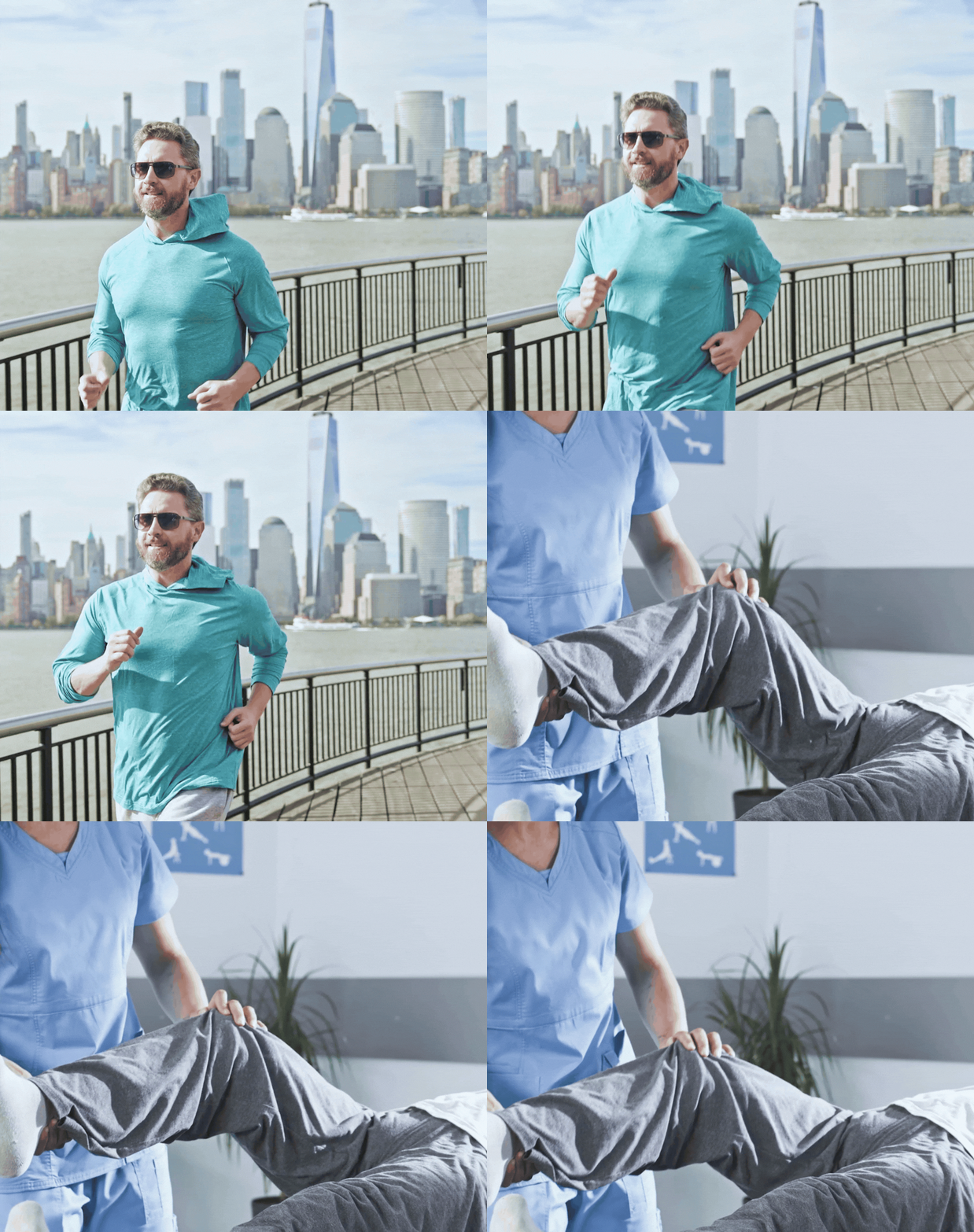
Sports Injury Rehabilitation in Redmond, OR
A sports injury in Redmond, OR, rarely feels like a single moment in time. Sometimes it starts with a tweak during a lift, a sharp step on a run, or a hard landing on the court. Other times, it builds quietly until your body starts sending clearer signals: soreness that does not settle, a joint that feels unstable, or a movement you suddenly avoid without thinking.
You may be trying to stay active while wondering which movements are helping and which ones are setting you back. That gray area is where a lot of people get frustrated, especially if the only advice has been to rest, stretch, and wait. A focused evaluation can clarify what is irritated, what is compensating, and what needs to change so you can move forward with more confidence.
At Advanced Pain Solutions, we often use physiotherapy & sports rehab as part of orthopedic rehabilitation. We assess mechanics, tissue health, inflammation, and nerve involvement, then build a plan with athletic injury recovery options that support real recovery, not just short-term calm.
If you want a clearer path forward, schedule a consultation to review your symptoms and discuss next steps.
about
Understanding Sports Injuries
Sports injuries can affect far more than your training schedule. When something feels off, you may start adjusting your stride, limiting rotation, or favoring one side without realizing it. Those compensation patterns often create new stress in nearby joints and soft tissue, which is why a simple ankle sprain can turn into knee or hip irritation, or a shoulder strain can start changing how your neck and upper back feel.
In many cases, the problem is not only the tissue that hurts. It is also how the body is absorbing force. Weakness, poor timing, limited mobility, and old movement habits can keep reloading the same area even after the initial injury calms down.
Our goal is to identify what is driving your pain and why it keeps showing up with certain movements. With the right mix of targeted rehab and supportive therapies, many active adults can return to the activities they care about with better control and less fear of a setback.
Common Causes of Sports Injuries
Sports injuries are not always caused by one big impact. Some of the most common contributors include:
Overuse and Tissue Irritation
Repetitive training can overload tendons and soft tissue, especially when volume increases too quickly. You may notice soreness that lingers after workouts, stiffness the next morning, or discomfort that flares during the same movements. Without a plan to improve load tolerance, irritation often returns as soon as you ramp up again.
Sudden Strain or Microtearing
A fast change in direction, a heavy lift, or a quick reach can strain muscles and connective tissue. Pain may feel sharp at first, then settle into a deep ache that shows up with certain positions. If the area stays guarded, mobility and strength can drop, making reinjury more likely.
Joint Instability or Poor Control
When a joint lacks stability, the body often tries to protect it with tightness and altered mechanics. This can happen after an ankle sprain, knee injury, or shoulder strain. Many people describe it as feeling unpredictable, like the joint cannot be trusted during pivots, landings, or uneven ground.
Limited Mobility and Compensations
Restricted motion in the hips, ankles, thoracic spine, or shoulders can shift force into places that are not built to take it. Over time, that extra stress can irritate tendons, joints, or nerves. These patterns often show up as recurring pain that moves around rather than improving steadily.
Previous Injury That Never Fully Resolved
Old injuries can leave behind scar tissue, weakness, and movement habits that keep stress circulating through the same area. Even if the original pain faded, the underlying imbalance may still be present. That is why symptoms can resurface months or years later, especially under fatigue or higher training loads.
- Pain that returns during the same sport‒specific movement.
- Swelling, warmth, or tenderness around a joint.
- Stiffness that limits range of motion.
- Sharp pain with cutting, jumping, or landing.
- Weakness, instability, or a feeling of giving way.
- Discomfort that spreads into nearby areas due to compensation.
- Symptoms that linger past the expected recovery window.
How We Effectively Treat Sports Injuries in Redmond, OR
We match your care plan to what your exam shows, how your body handles load, and what you want to return to. Sports injury treatment in Redmond, OR, may combine regenerative options, hands-on care, and guided rehab so pain improves while strength and control rebuild over time.
Physiotherapy
Physiotherapy builds the foundation for lasting recovery. We focus on strength, mobility, and movement control, then progress you toward the activities that matter to you. That may include improving hip and core support, restoring joint mechanics, and rebuilding tolerance for running, lifting, or long workdays on your feet.
Sports Injury Rehabilitation
Sports injury rehabilitation is designed around the demands of your sport, not just a checklist of exercises. We look at how you jump, land, decelerate, and change direction, then address the weak links that increase reinjury risk. The plan evolves as you improve, so your return feels earned and stable.
Orthopedic Manual Therapy
Orthopedic manual therapy helps restore motion and ease soft tissue restriction that can limit how freely an area moves. Hands-on work may support smoother joint mechanics, reduced muscle guarding, and more efficient movement patterns. It can be especially helpful when stiffness affects your form, and it works best when followed by targeted strengthening that helps your body keep improving.
Chiropractic Biophysics and Chiropractic Adjustments
Sports injuries often involve more than the injured area itself. When spinal alignment, posture habits, or joint mechanics are off, force can shift into vulnerable tissue. Chiropractic biophysics focuses on structural correction, while chiropractic adjustments support mobility and coordination so your movement feels cleaner as you rebuild.
Spinal Decompression
When nerve irritation or disc-related stress is part of your symptom pattern, spinal decompression may help reduce pressure and create space for healing. This can matter for athletes dealing with radiating pain, stubborn low back flare-ups, or symptoms that worsen with impact. We use it to support function alongside rehab, not as a standalone fix.
Trigger Point Injections
After an injury, muscles often tighten to protect the area, especially around the hips, shoulders, and spine. Trigger point injections can help calm persistent muscle knots that keep pulling on irritated tissue. This may make movement feel smoother and more comfortable, particularly when paired with mobility work and progressive strengthening.
Nerve Blocks
If pain feels intense, constant, or overly reactive, a nerve block may help reduce the pain signal so you can move more normally again. This can be helpful when symptoms are slowing rehab progress or keeping your body in a constant protective pattern. We use it as part of a broader plan aimed at restoring capacity.
Regenerative Treatment
Regenerative treatment may include PRP therapy, stem cell therapy, and amniotic fluid therapy, based on your exam findings and goals. These options are designed to support tissue recovery, calm inflammation, and improve how an irritated area tolerates training and daily activity. We pair them with rehab so progress translates into better strength and control.
Knee Bracing and Back Bracing
Depending on your injury and activity demands, we may recommend a knee brace or back brace to reduce strain during flare-ups or higher-load phases. The goal is to add stability while you rebuild strength and control. We guide fit, wear timing, and when to taper off so support stays practical and temporary.
Athletic Injury Support for Active Adults in the Redmond Area
Central Oregon makes it easy to stay active, but the same trails, slopes, and training habits can also lead to injuries that do not fully resolve on their own. Whether you are skiing, hiking, running, or playing weekend sports, lingering pain can start changing your confidence and your form.
At Advanced Pain Solutions, we work with adults who want clear answers and a plan they can follow. We connect what we find on exam to practical goals like returning to training, moving without hesitation and reducing the risk of reinjury. If you have been cycling through rest and flare-ups, athletic injury care in Redmond, OR, should feel organized, personal, and focused on what helps you return with confidence.
Local Access & Neighborhoods Served
Located at 1020 SW Indian Ave, Ste 100, Redmond, OR, 97756, our clinic is near local spots like Dry Canyon Trail and the Deschutes County Fair & Expo Center, with practical access from US-97 and OR-126 for patients coming in from across the region.
Ready to visit us for advanced pain management and regenerative medicine in Redmond, OR? Contact our team to schedule your evaluation.
We proudly serve patients throughout Redmond and nearby Central Oregon communities, including:
Sports Injury Rehabilitation FAQs
Should I play through the pain?
Generally, no. Muscle fatigue and training discomfort are different from sharp pain, swelling, or instability. Playing through an injury often creates compensation patterns that shift stress into other joints and can turn a manageable issue into a longer recovery.
When can I return to my sport?
Return-to-sport timing depends on what your body can do under load, not only how it feels at rest. We use sport-specific functional testing, such as hop tests, agility drills, and strength ratios, to confirm readiness. The goal is to reduce the risk of reinjury, especially when you are moving fast or under fatigue.
Can you help prevent ACL tears?
Yes. Many ACL injuries are linked to weak hip control, poor landing mechanics, and delayed neuromuscular timing. Our rehab programs focus on training how you decelerate, absorb force, and stabilize the knee during cutting and jumping. This helps your body handle high-demand movement more safely.
Do I need a referral for sports rehab?
In Oregon, you have direct access to physiotherapy, so you can start care without a referral. We can evaluate your injury right away and guide the next steps based on what we find. If we suspect a fracture or a case that may require surgery, we will refer you to an orthopedist.
Is ice or heat better for a sports injury?
For the first 48 hours after an acute injury, such as a sprain, ice is typically best to help manage swelling and calm symptoms. After the acute phase, heat can be helpful for loosening tight muscles before rehab exercises. We will guide you based on the type of injury and your response.
Can you treat old sports injuries?
Absolutely. Many athletes carry nagging pain from past injuries that never fully regained strength, mobility, or control. We look for scar tissue, joint restrictions, and movement imbalances that may still be affecting you years later. With the right plan, it is often possible to improve comfort and function even when the injury is not new.
Reach out to us
Phone number
This form should only be used for general information (ie don't send any detailed/personal health information via this form). All patient‒specific care questions should be addressed during your appointment.